home | subscribe | contact us | advertise with us | feature editorial guidelines | research editorial guidelines | gcsaa.org
December 2006

MEMBER spotlight

ABOUT this issue

WEB exclusive

FEATURE articles

GCM toolbox

DEPARTments

REsearch

GCM blog

GCM's Ask the Experts

Dominican dream

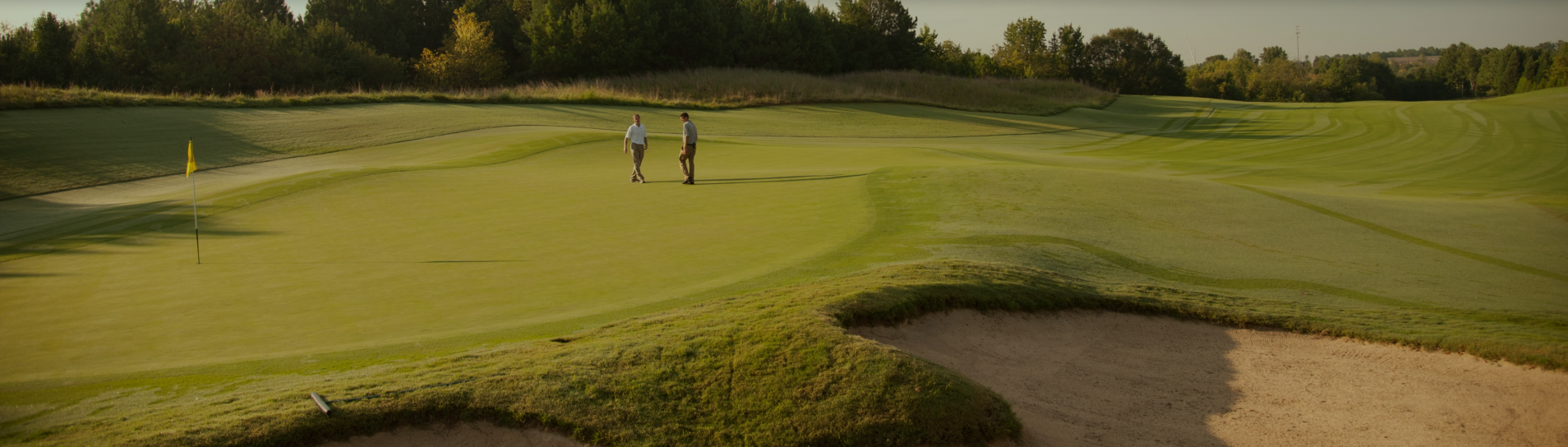
About a year after moving to the Dominican Republic, Damon Di Giorgio was offered a full-time position as head superintendent by Troon Golf, the firm managing the operations of the Roco Ki, which will ultimately encompass three 18-hole courses. Photos courtesy of Andy Haggar/Faldo Design

Other than the highways, Damon Di Giorgio doesn’t miss much about life in the United States.

Not the cool, windy climate of San Francisco, not the hustle and bustle of American life and not even the cool-season turfgrasses he worked with as assistant superintendent at the California Golf Club of San Francisco.

He got a phone call in January 2005 with an opportunity to give all that up, replacing it with the balmy, laid-back tourist destination of the Caribbean’s Dominican Republic, where locals linger in their swim trunks late into the night at their favorite beachside watering hole, drivers heed no traffic laws and the temperature rarely dips below 75 degrees.

The call was from Oscar Rodriguez, vice president of golf course construction company Weitz Golf and one of Di Giorgio’s work associates, and the offer was to be project superintendent for the Westin Roco Ki Beach & Golf Resort, a new Nick Faldo-designed layout in the Punta Cana region of the Dominican Republic.

“When (Rodriguez) said, ‘We want you to be their project superintendent,’ I thought, ‘I’m 28 and I’m single, why not?’” Di Giorgio says.

The catch? They needed him there in two weeks.

“I spent two days making phone calls to golf courses down there because I had no idea where the Dominican Republic was, I signed my employment agreement on a Monday and the following Saturday I was here,” he says. “I gave power of attorney for my car to the golf course mechanic so he would sell it for me, and my bed, my desk, my computer and TV, I gave it all away to the crew where I worked.”

More good fortune
Minus many belongings but residing in arguably one of the world’s most beautiful beach locales, Di Giorgio received another stroke of good fortune in May 2006 when he was hired on as a full-time superintendent by Troon Golf, the firm managing the construction, development and operations of Roco Ki.

“Now I feel like I get my cake and get to eat it, too, because

Damon Di Giorgio

The Westin Roco Ki Beach & Golf Resort
Punta Cana region of
Dominican Republic
Years at this course: 11⁄2
Years as a superintendent: 11⁄2
Years as a GCSAA member: 11

I’m still involved with construction but also get to grow the grass, so I’m just really blessed to have this opportunity,” Di Giorgio says. “And I was really excited to work with Mr. (Jeffrey) Spangler (senior vice president, science and agronomy, Troon Golf) and Mr. (Ron) Despain (vice president of golf course development, Troon Golf).”

His involvement in the construction end of the business will deepen when two additional courses break ground after the first course opens at the end of 2007.

“I’ll be overseeing this course and will probably have a superintendent on this course, then also I’ll be overseeing the construction of a second course, so I’ll still have the balance of construction and maintenance,” Di Giorgio says.

“Eventually it’ll be three 18-hole courses. This is a big project. By the time it’s completed, they’ll have 8,000 hotel rooms, at least 6,000 resort homes and an equestrian center and marina. So far, they’ve sold well over $100 million worth of property.”

The dream gig also lets Di Giorgio indulge in another interest of his — the science of soil, a passion that’s carried over from his college days of serving on North Carolina State University’s soil-judging team.

“The turf is very exciting,” he says. “We have the newest seashore paspalum, Supreme — the latest and greatest from Dr. (Ron R.) Duncan, formerly at the University of Georgia.

There are only a handful of golf courses in the world with this variety, and it’s very exciting to be on the leading edge of this. Soil conditions are really tough here.”

The Roco Ki courses are being built on limestone, a cemented rock that’s not as porous as you might think, Di Giorgio says.

“The pH here is 9, and normally we like to grow grass at 6.5,” he says. “And then the water here is very salty, as well. You try to get the salt out of the soil, but when you irrigate, you put more salt on. It really causes a lot of problems, but it’s really interesting.”

Cultural awakening
Another major adjustment for Di Giorgio has been to the Dominican Republic way of life. A missing or broken equipment part can mean a month-long wait for the item to be delivered by ship, Di Giorgio says.

“Everything has to be shipped in on containers from the U.S., and that goes through customs,” he says. “If it’s a small piece that you can get in a UPS package, it takes one to two weeks depending on how long it sits in customs. If it’s anything big like equipment, it’s a minimum of four weeks. In America, we’re so spoiled to get everything overnight. Here, you just have to plan ahead.”

The lack of resources is one reason why Di Giorgio says his work is three times tougher than on a golf course in the U.S.

“Whether it’s getting fertilizer, equipment or anything, even grocery shopping, you have to go at least an hour away,” he says.

Another difficulty is the locals’ overzealous desire to please.

“The people here are so great that they always want to please you,” Di Giorgio says. “You ask them if they have a part, and they say yes to make you happy, but they don’t have it. It’s the craziest thing. They’re just so darn nice. But it’s better to say, ‘No, I can’t get you that part.’ They just won’t do that.”

But that’s just about the worst of his complaints. On the other hand, Di Giorgio lives a mere 20 steps from the ocean. And he’s hard-pressed to come up with something he misses about his previous location.

“Believe it or not, I really don’t (miss anything) because I gave away my winter clothes,” he says. “I do miss the American highways because the roads here aren’t that good and nobody follows traffic rules. But I like the warm weather and to be able to just walk a few steps and be on the beach with your friends 12 months of the year, play beach volleyball on Sunday afternoons after a hard day at work, and just go for a quick swim in the ocean in the warm, clear, blue water.”

Not only does Di Giorgio enjoy spending time on the beach, but he also got a gig running on the shore with a professional model for a video promoting the club as a tourist destination.

“They were doing this commercial to put on airplanes that are coming into the Dominican Republic, so for the American crowd, they needed an American actor, and I’m American and I work at Roco Ki,” Di Giorgio says. “We had to be on the beach first thing for sunrise and do all this crazy stuff like take my shirt off, pick (the model) up and run into the ocean.

“At one point, they had a camera man, a lighting guy and a director doing the photo shoot, and all of a sudden, the owners came down. They hired me to be entrusted with this $20 million project, and here I am with my shirt off.”

Much of Di Giorgio’s time not working on the course or doing photo shoots with models on the beach is spent at a bar and restaurant on the beach called Soles.

“It’s the coolest place in the world because when you order, you might order coconut fish with rice and you might get lemon fish with French fries, and it’s so laid-back, you don’t care,” Di Giorgio says. “Everybody meets there. You’re on the beach, it’s 9, 10, 11 o’clock at night, you’re having beers and drinks and you’re still in your bathing suit.”

Though the description of his newfound lifestyle must certainly appeal to many, it’s surprisingly difficult to attract employees, Di Giorgio says.

“I can’t thank Troon Golf enough for treating me so well, but at the same time, they thank me every day because they can’t get people to come here to work,” he says. “They can, but it’s tough. You’ve got to have patience.”

10 QUESTIONS WITH DAMON DIGIORGIO

1. Ever get homesick for the cooler, windier climate in San Francisco?
No, absolutely not. Not at all.

2. Lowest temperature you’ve seen in DR? 74 degrees.

3. Highest temperature you’ve seen in DR? That’s a tricky question. I do the weather report on two different Web sites for the Punta Cana region. The actual temperature has gotten to 100, but with this humidity, it feels like 110, 115.

4. What’s your favorite DR tradition? Bachata — a type of dance that they do. It’s a pretty cool dance. It’s almost like a two-step in some ways.

5. Does the beach ever get old? No.

6. How’s the social scene in DR? A lot of times, you have dinner at 10, and then we go to Soles around midnight, then chill out for awhile, then at 1, 2 in the morning, you go out to the nightclubs or discos. Young, old, it doesn’t matter. Last Saturday night I was with a group of people, we had dinner at Soles, at 1 we went to a disco, and the group ranged from ages 15 to 52.

7. What do you do over the holidays? Last year, I sent the guys home who had family. I’m not married, don’t have kids, so I sent those guys home to be with families and I stayed here.

8. How long do you imagine staying in DR? At minimum, at least two more years.

9. Favorite sport besides golf in DR? Beach volleyball.

10. Any American television shows that are oddly popular in DR? “The Simpsons” in Spanish is pretty funny. The voices are dubbed, so you have an entirely different voice for Homer, Bart; it’s all different.


Darcy DeVictor is associate editor for GCM.


RECENT issues

November
2006

October
2006