![]() |
|||||||||||||||||||||||
| home | subscribe | contact us | advertise with us | feature editorial guidelines | research editorial guidelines | gcsaa.org | |||||||||||||||||||||||
|
|
|||||||||||||||||||||||
| September 2008 |
|
||||||||||||||||||||||
|
|
A new New Orleans Three years after Katrina, GCM revisits some old friends in the Big Easy and sees that a lot can change — for better and worse.
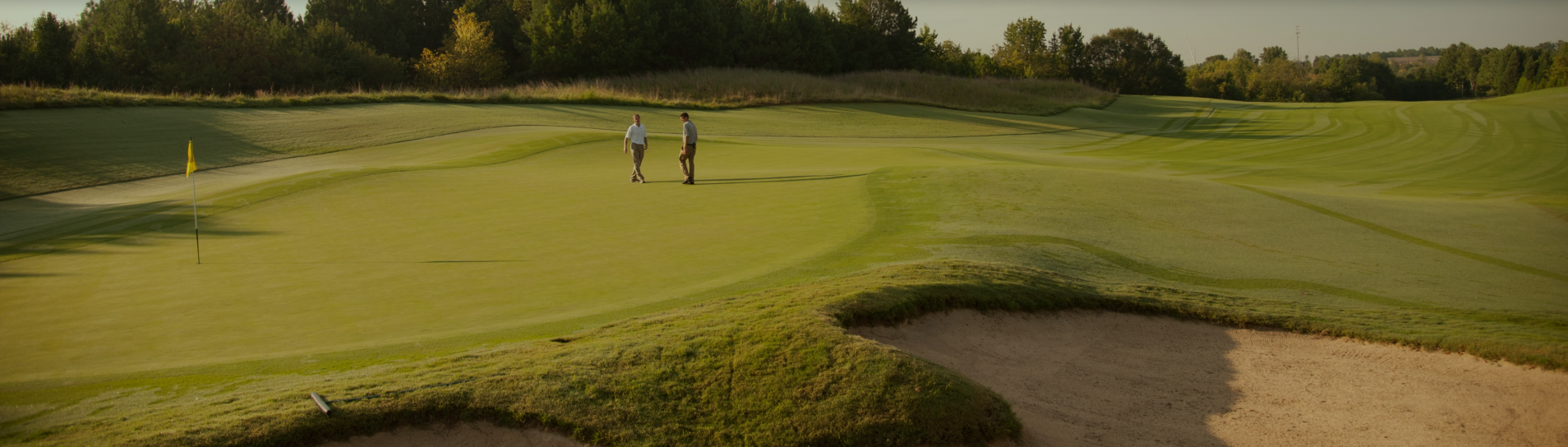
The first hole on the North Course at Bayou Oaks Golf Course was never meant to be a signature hole. It’s not the signature hole of the course. But to look at it now and compare it to what it looked like two years ago… in a metaphorical way, No. 1 could be considered the signature hole for the entire city of New Orleans. Consider that in March of 2006 — seven months after Hurricane Katrina — this hole hosted a deserted car. Windshield busted out, hood caved in, flat tires — it was probably the ugliest tee marker in the history of golf. Trash was strewn about. The grass was unkempt. Almost mockingly, a bowling ball somehow found its way to the fairway. Today, the first at Bayou Oaks North — “City Park” as it’s referred to by the locals — looks much different. Gone is the deserted tan Mitsubishi. The trash has been collected. A fairway mower eagerly races back and forth in an effort to get the course ready for its Labor Day weekend grand reopening. And perhaps the most exciting thing about this scene is the fact that the FEMA trailers that were in the parking lot are gone. In their place are the cars — working cars with windshields intact — of real-life golfers. The driving range is half-full on this Tuesday afternoon and a young golfer is getting a lesson from a PGA professional. Similar scenes are taking place all over the city. Builders are building, cooks are cooking and golfers are golfing. A lot has changed since Hurricane Katrina. This city is a city in flux. It’s a new New Orleans.
Straight shots of reality This being an association magazine — the magazine of an association that will be bringing its biggest annual event, the GCSAA Education Conference and Golf Industry Show, to New Orleans in February — readers may expect to read a glowing portrait of the Crescent City. After all, that would certainly be in the association’s best interest. GCSAA staff was even offered a taste of the New Orleans Kool-Aid in early 2008. A member of the New Orleans Convention and Visitors Bureau, along with the sales manager for the Ernest N. Morial Convention Center, visited GCSAA headquarters to talk to the staff about what New Orleans looked like nearly two years after Katrina. Turns out Kool-Aid wasn’t being served at all. Instead, it was straight shots of reality.
GCM visited several golf courses back in March of 2006, when the scars from Katrina were fresh. This was during a goodwill trip organized by members of the Rocky Mountain GCSA. The trip brought two dozen volunteers to work on four New Orleans golf courses to help the courses try to get back to normal. The hard work earned the crew signed certificates of merit from New Orleans Mayor Ray Nagin, and it earned Steve Sarro, the superintendent of Vail (Colo.) Golf Course who first came up with the idea, the honor of being named Colorado’s golf person of the year. Also helping post-Katrina were GCSAA chapters in Florida and the Carolinas, as well as some industry partners.
GCM returned this July to see what the city looked like, to see the renovated convention center and, most important, to check in on some friends. The supers First of all, the attitudes of the superintendents were quite a contrast from what they were in 2006. Surely the most anxiety-ridden superintendent was Peter Carew, superintendent for the city of New Orleans. One of his courses was closed (Bartholomew) and the other (Brechtel Park) was trying to survive with no budget, no irrigation and little equipment. These days, Carew seems like a new man. He’s smiling not just because he has a new girlfriend. (“The storm did more than just damage property, it damaged relationships,” he says of splitting with his wife.) He says the life of a superintendent in New Orleans is a lot less stressful than it used to be. “I can see a light at the end of the tunnel now,” he says. “I’m a positive person, but it was starting to get me down after a while. It was like, ‘What am I doing?’ But the city is coming around.” And by “the city,” he specifically means his employer. The city of New Orleans has handed out its plan for rebuilding New Orleans, and he sees his properties listed among the parks that will be getting assistance. “The brochures of projects for the city, they’re all listed. They put a sign up at every property they’re going to do,” Carew says. “They just tell you to be patient; they’re going to do it.”
Of course, there are basic creature comforts Carew has just gotten used to not having — an irrigation system, for example. His crew of eight still uses fire hoses to pump water from the lagoon to irrigate the 18 holes at Brechtel. “Everyday it’s something new to make it all work,” Carew says. “We stretch hoses 2,000 yards in some areas. But the parking lot is full on weekends.” Brechtel Park had 37,000 rounds of golf last year. Carew anticipates 40,000 to 45,000 this year. GCM found Walker Sory, the Class A superintendent at Audubon Park Golf Club, along with his assistant superintendent/brother-in-law Mark Decker, very much at ease. And why not? Golf rounds are way up for them as well, and Sory had one foot out the door for vacation. “We’re getting as much play, if not more, than we did when we first opened in 2002. 2007 was a record year for us. We’re getting more play than we ever have. Audubon is doing fine,” the 17-year GCSAA member says. Apparently Sory is doing fine as well, as his bags were packed for a trip to Hawaii. In 2006, the New Orleans superintendents certainly needed a vacation. None of them was about to take one, though, unless it was a permanent one. “I’m not from here, but I love this city. I think it’s a great place to live,” Sory says. “I wouldn’t want to live anywhere else.” Robb Arnold, Class A superintendent at TPC Louisiana, arrived at his course two years ago. “South Florida really didn’t fit my lifestyle too much,” Arnold, a Washington state native, says. “I’m more at home in New Orleans. I love it here.” In fact, Arnold talks like a superintendent in a state that wasn’t hit by one of the five deadliest hurricanes in American history. His concerns these days are fuel costs and water. Par for the course for most superintendents. “We’re beyond the storm — it’s business as usual,” the 11-year member of GCSAA says. “We’re back and we’re rolling. That’s the message that needs to get out.” When Katrina hit, TPC Louisiana, located in Avondale, didn’t suffer from flooding like courses in the city. Most of its damage was done by the wind. “This is a young golf course. It got set back with Katrina,” Arnold says. “Now, we’re at a point where we’re doing things you do to a young golf course. You tweak it, you make it look better. I’m not cleaning up anything from a hurricane.”
Labor woes One problem that Arnold has totally avoided that most other courses deal with in New Orleans is staffing problems. Arnold keeps his crew at 29 strong all season. He says the TPC course is able to recruit and retain people. Pat Ardoin, a former Class A superintendent who is now retired, probably knows more superintendents in the state of Louisiana than anyone else. So he knows just how lucky Arnold is to not be feeling a crunch from labor problems. “Most superintendents are having to bring in some unskilled employees,” he says. “It’s difficult to train them and then get them to where you can depend on them to take care of the course. That’s probably the toughest part for the superintendents here — they can’t get real worthy employees that have a lot of interest in the golf course to where they take it at heart.” Sory says he’s fortunate to have two universities, Tulane and Loyola, nearby. College students are a valuable resource for his staffing needs.
“We’ve actually raised our pay rates to compete. After the storm, the fast food places were paying $10 an hour because there weren’t any people here. So we’ve had to raise the wages,” Sory says. “When you’re dealing with part-time employees and you have to rehire because kids are going back to school, and then retrain … it makes labor a problem.” Carew is utilizing “Job One” employees. They’re not city employees, but they’re assigned by the city. They’re paid $10 an hour and get trained on the job. “All these people are new. Usually it’s the assistant that trains — I’m not that fortunate,” Carew says. “Before, I never wore jeans, I wasn’t allowed to. I wore nice slacks and a golf shirt – I was a golf course superintendent. I’ve reverted 30, 40 years. I’m teaching all these new people how to sharpen the mowers. I mow greens, I orchestrate topdressings. Is that good or bad? It’s my job, that’s what it is.” A city’s healing process Yes, the superintendents in New Orleans seem to be doing well. The city is doing better, too. “The city, the French Quarter, the uptown district, the areas where all the tourism is? It’s fine. It’s probably 100 percent back to normal,” Sory says. He has high hopes for the mulligan the city is getting for the Golf Industry Show. “Everybody I’ve talked to would love to come to New Orleans. In Orlando last year, they couldn’t wait to come here. I think people are going to want to see it, if they haven’t been here since the storm.”
Carew says a friend recently visited New Orleans and was shocked by what he saw. “He thought we were devastated. He couldn’t believe how good the city was,” he says. “We’ve put on a full-blown Mardi Gras. If they can do a full-blown Mardi Gras, they can of course handle the GIS.” A visit to the Ernest N. Morial Convention Center backs up what the two supers are saying. On this day it looks as if the GIS itself is packing up and leaving. Forklifts and pallets are strewn about much like they are late Sunday of the Golf Industry Show.
Except this is a food service convention for 18,000 people that is packing up. Veterans of past conferences and shows in New Orleans might not recognize the new-and-improved convention center. “If you were here before, all the doors were orange. It was a hip look in the ’80s, but we went with blue tones now,” laughs Mae Johnson, a sales manager for the convention center. “Every carpet, every chair, every soft surface in this building has been replaced.” The facility has undergone a $62 million renovation. It’s a renovation that was already in the works before Katrina, but that plan called for a step-by-step retooling to be completed over the course of a few years. Once the storm hit, causing events like GCSAA’s conference and show to find new homes, the renovation was fast-tracked and completed in just 14 months. “The first things they put back together were the convention center and the Superdome. They wanted to be rid of the memories (of Katrina),” Carew says. “The city is ready for business. This is one of the largest convention centers there is — and it’s walking distance to everywhere.” “Where the convention center is, you got the casino right there, the French Quarter right there, the restaurants right there. It’s a great venue, it’s a great time,” Sory says. “The response has always been positive. Everybody thinks, you come to New Orleans, it’s all about drinking. But there are a lot of family things to do here as well.”
Lack of golf It’s easy to see the city of New Orleans bouncing back. The downtown is vibrant. The neighborhoods are busy with construction. One thing that is lagging, though, is golf. Many courses still have not come back. It’s a big reason why the courses that are open are seeing so many rounds — fewer courses for the golfers to choose from. “It’s tough to play. It used to be you could find a course right down the road; it was no problem,” says Harold Malcolm, a resident of Covington, La., who has been golfing for about 10 years. “But it’s coming back, it’s definitely coming back. It’s better than it was.” “They’re still working on the City Park courses,” says John Gremillion, a lifelong New Orleans resident. “It used to be we headed to the North, East, West and South courses to play. They’re just now working on the North Course.” But they are working on the North Course; that’s the key. The sound of mowers is better than the silence that was here three years ago. The course was scheduled to open on Aug. 30, and all indications were that it would make that date. The state-owned course received assistance in the form of donations from both Club Car and Par Aide. FEMA assessed the damage to the four courses, which were under 3 to 8 feet of water for almost a month, at $350,000 — a far cry from the $4 million the course wanted. “Our little golf course is kind of in slow-motion.” says Larry Griffin, PGA teaching pro for the Bayou Oaks driving range at City Park. “We’re kind of in limbo right now.” But he quickly switches gears from his own plight to the plight of New Orleans. Not wanting to discourage golfers from visiting, he stresses that there are other great courses to be played in the area. “We have seven golf courses within 8 miles of downtown. Call Audubon or Metairie Country Club — they’re both great courses,” Griffin says. “If you’re the decision maker, get off your butt and get down here.” Carew knows how hard it is to watch as a course falls by the wayside. The Joseph M. Bartholomew Golf Course is still closed. City employees occasionally take Bush Hogs and knock down the overgrowth on the course. That’s all the maintenance the course sees these days. “My maintenance barn (at Bartholomew), one of those vandals that spray-paints buildings … he painted the word ‘Harsh’ on the garage door,” Carew says. “I pulled up and I saw it, and I just sat there for a few minutes. And I thought, ‘You know what? That’s a pretty good word to describe it.’” Ardoin retired in 2007 after working at multiple courses in the area. He also owned his own irrigation business for a while. Carew can remember Ardoin helping him aerate his greens 30 years ago. Ardoin still remembers the $500 GCSAA scholarship he got back in 1963. “That was a substantial amount of tuition and books in those days,” he laughs. Ardoin, who lives in Lafayette, a little over two hours away, stops his truck at Bartholomew to see what is left of the course. He stands on what used to be a putting green but is now more a jungle of weeds than anything related to the game of golf. At least he finds a golf ball this time — in 2006, he was looking at a lost bowling ball at City Park. The weeds come up to Ardoin’s waist. If the North Course is in “limbo,” then this course is in hell. “It’s amazing how quickly nature takes over, isn’t it?” he asks. It’s also amazing how hard people — like Ardoin and his colleagues making New Orleans beautiful again — are willing to fight to get it all back. Build a house, create a future If you’d like a hands-on opportunity to help the people of New Orleans, here’s your chance to make a difference. The partnering associations of the Golf Industry Show are teaming up with Habitat for Humanity for a series of special work days prior to the trade show to help build homes in some of New Orleans’ most devastated areas. No experience is necessary, and all the equipment and supplies are provided. Your time and energy can help make dreams come true for several families. Work days will be Tuesday, Feb. 3, and Wednesday, Feb. 4, from 7:45 a.m. to 3:15 p.m. All volunteers will be in teams of 15 to work on homes within a particular area. The GIS will provide transportation from the New Orleans Morial Convention Center, lunch at the work sites, and plenty of outdoor necessities such as water and sunscreen. You’ll also receive a project t-shirt to show your team spirit and build camaraderie with your peers. If you’d like to participate in this first-ever volunteer project, register for the event online or via registration form A-2 in this year’s GIS brochure. There’s a $25 registration fee. Even if you can’t participate, you can still support Habitat’s efforts in New Orleans through a donation on the registration form. Deadline for registration is Jan. 2, 2009. Look for more details about this project at www.golfindustryshow.com. |
|
|||||||||||||||||||||