Made in China

For American superintendents in Hong Kong, successful course management requires ingenuity and adaptability.

Darren J. Davis

Made in china

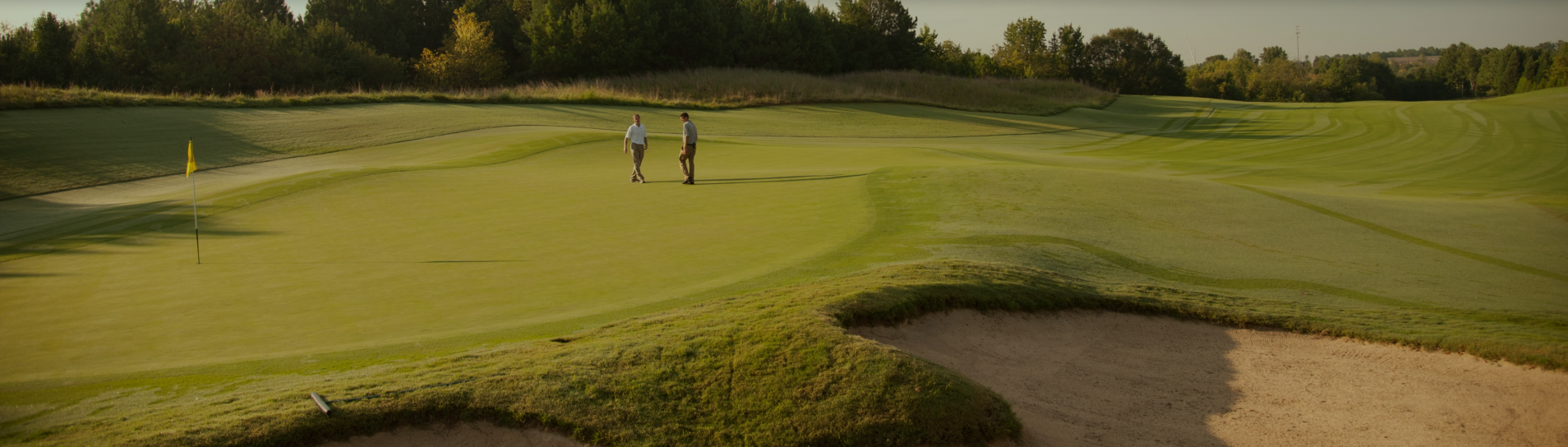
Discovery Bay GC offers breathtaking views of Peng Chau (the island in the foreground), Hong Kong Island (back right) and the peninsula of Kowloon (back left).

Related Articles

{short description of image}Not the only game in town

{short description of image}2000 Leo Feser Award Candidate

At the stroke of midnight on June 30, 1997, after 150 years of British colonial rule, Hong Kong returned to the arms of its motherland. The eyes of the world were intently trained on this tiny enclave. In addition to being an exciting and momentous occasion, this was also a very tense period -- not only for the residents of Hong Kong but for many democratic countries, including the United States. Around the world people anxiously awaited the ensuing weeks to see how their lives might be affected.

For at least one American living in Hong Kong at the time, Lee Sellars, golf course superintendent at Discovery Bay Golf Club, it was a very nervous time.

This past summer I had the opportunity to spend a few weeks exploring Hong Kong with Sellars. The eight-year GCSAA member admits he was concerned about how the handover to China would affect his life in Hong Kong. But he is quick to point out that, on the surface, not much has changed.

Setting the scene
Although Sellars is still cautious, he explains that under Chinese rule, Hong Kong is now a Special Administrative Region (SAR) of China operating under the arrangement of "one country, two systems." The Chinese government wisely decided to allow the people of Hong Kong to essentially function independently from mainland China, at least for the time being.

Made in China

Compared with mainland China, this astonishing territory has experienced an extraordinary pace of change. But despite ever-changing cityscapes and landscapes, the underlying strength of Hong Kong's cultural traditions remains intact.

Although the former British colony derives its name from just one island, Hong Kong Island, the region is far more diverse than the big city and crowded harbor that most people perceive as "The Hong Kong." In fact, just a quick, scenic five-minute ferry ride north across the harbor lies the Peninsula of Kowloon, a densely populated area and popular tourist attraction. North of Kowloon are the expansive "new territories" that stretch up to the border of China and also include more than 260 outlying islands dotted throughout the South China Sea surrounding the Kowloon Peninsula and Hong Kong Island.

Surprising to me was that Hong Kong, which occupies more than 386 square miles and has a population of more than 6.6 million, has only five golf courses: Discovery Bay GC, Clearwater Bay Golf Club, Hong Kong Golf Club, The Shek O Golf Club and the newest, a public golf course, Kau Sai Chau.

The largest of the 260 islands of Hong Kong is Lantau Island, which is actually twice as large as Hong Kong Island. Lantau is the home of Discovery Bay, where Sellars has served as superintendent for more than four years. The course was designed by Robert Trent Jones Jr. and opened for play in 1983. The golf club is just one of the many amenities in the self-contained township of Discovery Bay, which is being developed by the large international corporation of Hong Kong Resorts (HKR).

Although Discovery Bay seems in many ways a world apart from Hong Kong, it's only a short ferry ride from the main island if one needs the bright lights and exciting bustle of the big city. The hilly golf course of Discovery Bay, located on one of the highest elevations on Lantau, offers breathtaking views of Hong Kong Island and harbor.

"I still have to pinch myself some days when I gaze out from the golf course and see the incredible scenery that most people will only have the opportunity to see in pictures," Sellars says.

Golfers at Discovery Bay GC also enjoy the natural beauty of Hong Kong. Behind this small practice green is the reservoir used for irrigation.
Bay GC

Climatic challenges
Although the view from the course is certainly easy on the eye, growing grass is far from easy. "This is without a doubt one of the hardest places in the world to grow grass," Sellars admits.

The weather provides a challenging environment for maintaining quality turfgrass. Hong Kong is on approximately the same latitude as the Bahamas, Hawaii and Mexico City. Like these locations, Hong Kong can have periods of very hot, humid weather. Weather data collected at the Hong Kong Observatory between 1961 and 1990 show that the mean daily maximum temperature is 30.42 degrees C, or 87 degrees F, from May through September. The humidity is also a daily struggle, averaging more than 80 percent year-round.

However, the weather is not the greatest challenge to growing year-round quality turfgrass. "The main reason it is so difficult to maintain exceptional quality turfgrass is light quality and duration," Sellars explains. "There are periods of the year when it seems like we do not see the sunlight for weeks!"

Although the frequent rain showers that roll off the South China Sea do provide cloud cover for long stretches, it's the fog that creates the biggest deficit of quality and duration of sunlight. According to Sellars, shortly after the Chinese New Year (just after the beginning of our calendar year), warm water and cool air temperatures combine, and the longest period of extensive fog begins.

"The fog can be so thick that we regularly will have to hold back play for several hours in the morning, and there have been times when we have not been able to play golf all day," he says.

Employees at Discovery Bay harvest stolons to plant the newly constructed short course.
Discovery Bay

Statistically this phenomenon occurs in the months of February, March and April. Again, according to meteorological data gathered between 1961 and 1990, in Hong Kong cloud cover in these months is more than 75 percent.

Leaving the lights on
Golf course superintendents worldwide face a variety of challenges that may be very different from those of their peers. Nevertheless, most superintendents share a reprieve in that they can go home each night and for the most part, get a good night's sleep knowing the course has been put to bed for the night. Not so for Sellars!

Like many avid golfers, the management at Discovery Bay believed there was not enough time in the day to get in a round of golf whenever they wanted. Large overhead electric lights were installed on nine of the 27 holes, and the switch is flipped on Wednesday, Friday and Saturday nights.

Although they certainly have some negative effects, such as allowing for increased turfgrass wear and the potential for attracting mole crickets, the lights do have a positive side, according to Sellars.

"It is a nice change to inspect the nine holes under the artificial light," he notes. "Many of the minor imperfections that I see during the daylight hours cannot be seen under the electric lights. In fact, the course actually looks great almost every time I drive it at night!"

Cultural adjustments
Aside from less available sunlight, the climate in Hong Kong is very similar to that of south Florida. So the three years Sellars was employed as an assistant superintendent at Wycliffe Golf and Country Club and The Loxahatchee Club in Palm Beach County, Fla., served as good training in successful management of bermudagrass turf and the other plant material at Discovery Bay. But there was very little that could have prepared Sellars for his biggest challenge: dealing with the people and the culture of the Hong Kong Chinese.

Discovery Bay superintendent Lee Sellars says the Internet and e-mail allow him to keep up with continuing education and to interact with peers.
Lee Sellars

"Hands down, the hardest thing to adjust to here was dealing with the people," he says. "They are very good people but extremely passive, and they do not show many emotions on the outside, which makes them hard to read."

Sellars also explains that it is very important to the Hong Kong Chinese to "save face," which has forced him to modify his personality somewhat to match that of the Chinese culture. He admits to having become a much more patient, tolerant person.

"It is actually fascinating to learn about the religious and spiritual beliefs of the people," Sellars says.

Like any good employer who is hiring a labor pool with different cultural and spiritual beliefs, Sellars has tried to educate himself on the background, history and beliefs of his employees and even participate in them when appropriate.

Sellars confesses he experienced a fairly large culture shock in his first few years in Hong Kong. "The adjustment included both on-the-job and off-the-job issues," he says.

The largest adjustment was gaining a better understanding of the local habits and customs. One of the first things he learned was that people do not like to begin the workday too early, and it is difficult to find people willing to begin work at 6:30 or 7 a.m. The majority of people in Hong Kong seem to prefer a later start, but they do not mind working well into the evening. Employment in Hong Kong is also not a matter of choice; it's a necessity of life. There are essentially no natural resources -- only 386 square miles of land, and no unemployment pay or minimum wages.

Sellars had an additional burden because the club is located in a relatively small, isolated community that does not have a large labor pool. The 13,000 people who have made the private community of Discovery Bay Township their home were attracted to the relaxed living environment. The residents are expatriates, as well as some locals, many of whom are working on Hong Kong Island and do not mind the 30-minute ferry ride twice a day. Therefore, Sellars has had to import the majority of his staff to the island.

The club has constructed dorm-style housing quarters for several staff members, and others live on the nearby island of Peng Chau. To get from Peng Chau to Discovery Bay, the golf course employees take the first ferry of the day, which leaves Peng Chau at 6:45 a.m. For the obvious reason of location, the golf course staff is fed lunch daily. In fact, Sellars hired an individual whose sole responsibility is to shop, prepare and serve the midday meal for the other crew members.

Importing labor from outside Hong Kong is not an option because legally the Hong Kong Chinese must be given first chance for all employment opportunities. Only in cases in which there is a specialized field, with no adequately trained local, is it legal to import an expatriate (a Westerner). In a country with only five golf courses, there has obviously been no formal education provided to prepare locals to become golf course managers. That's why an American such as Sellars can be hired. It's a complicated process, and strict laws have to be followed for a Westerner to be allowed to remain in Hong Kong. For Sellars to be hired by the Discovery Bay Co., he had to be "sponsored" by the parent company, Hong Kong Resorts, to obtain a work visa. If Sellars were to cease employment with his sponsoring company, he would be forced by the SAR government to leave Hong Kong.

Clearwater Bay also offers golfers stunning views. Superintendent Darren Cribbes is currently in the process of renovating the fairways and tees to native zoysiagrass.
Clearwater Bay

Sellars gives credit to some key individuals in the upper management of the Discovery Bay Co. for making his transition a smooth one. On the golf course, Sellars praises his outstanding assistant, Chan Yuen Hung, a local who has also received some formal education in the United States. As any superintendent is well aware, the relationship between assistant and superintendent is critical. Sellars says he is fortunate to have an individual such as Chan Yuen Hung, who not only has a great work ethic and a good personality, but is also willing to devote time to helping Sellars better understand the Asian culture.

A gweilo in Hong Kong
Although Sellars has been in the country for more than four years and, by everyone's standards has adapted very well, to the locals he will always be a "gweilo." Gweilo is a slang term that means "ghost man" when translated to English. The term was originally coined as a derogatory label for the pale-faced British colonial masters. Nowadays, the term is used, often humorously, for the Western expatriates who constitute less than 2 percent of the population.

Although a gweilo, Sellars has certainly earned the respect of many Hong Kong residents -- not only for his work at Discovery Bay and his outside consulting, but also for his mastery of Cantonese, the most widely spoken language in Hong Kong. Cantonese is a very challenging language because one word often has numerous meanings, depending on the tone used to pronounce it. It was astounding to see the locals' expressions change when Sellars would begin conversing with them in their native language.

The state of the game
The citizens of Hong Kong definitely love the game of golf, but with the lack of facilities, there is quite a premium on the cost of a golf membership. The highest membership cost at this time is at Hong Kong GC, which changed its name from The Royal Hong Kong Golf Club after the handover of Hong Kong from the British. A membership at Hong Kong GC costs more than $1 million U.S. It is also the oldest club in Hong Kong, having opened for play in 1889, and is home to the Hong Kong Open, which has been played at the Fanling Course since 1959. The winner's trophy from this event has been presented to some well-known golfers, including Greg Norman and Ian Woosnam.

Memberships at all five clubs are obviously for the "elite" of Hong Kong. Many of these individuals are members at more than one of the clubs.

"Since there are so many shared members among the various clubs, we are often compared to one of the other clubs in Hong Kong," says Shane Templeton, a native of Australia and the golf course manager at Hong Kong GC.

Sellars adds, "Not only are we compared to the guys across town, we are compared to clubs across the border in China and even clubs in America as many of our members frequently travel abroad."

Why are there only five golf courses in an area with a population of more than 6.6 million and a society that is so obviously enamored with the sport?

Bertie To Jr., managing director of Discovery Bay GC and secretary-general of the Asia Pacific Golf Confederation, helped shed some light on this topic: "The cost of the land lease combined with the extreme environmental restrictions have made the development of golf courses almost unaffordable."

For example, he noted the recently opened Kau Sai Chau golf facility, which is a public course constructed by the Jockey Club for a cost of $522 million HK.

"The $522 million HK does not include the cost of the land," To explains. "Private citizens do not own land in Hong Kong. Instead, the land is owned by the government and subsequently leased to individuals."

All of the land leases were reissued after the handover of Hong Kong to the Chinese government. The new leases from the SAR of China are for terms of only 50 years. This obviously creates an enormous hardship for an individual or corporation trying to receive a return on an investment.

In contrast to the United States, where the "Tiger Woods craze" is drawing large groups of young people to the game, junior golf in Hong Kong seems almost nonexistent. To agrees with this observation and says, "It is unfortunate that the youth of Hong Kong are not afforded the ability to participate in the great game of golf. The main reason is that access to golf courses is extremely limited.

"The very demanding curriculum in the Hong Kong school system does not allow for very many extracurricular activities for our children," he adds.

Management ingenuity
As one might expect, turf management supplies and equipment can be hard to come by. "Most Americans take way too much for granted, and until you do not have the luxury of some very basic things, you can not fully comprehend the struggles others often endure," Sellars says.

The all-grass horse track in downtown Hong Kong has numerous resources, including an on-site lab, to help maintain conditions for the weekly races.
horse track

All the superintendents I spoke with in Hong Kong agreed that it is certainly a challenge to maintain turfgrass to American standards with such limited resources. Even communicating with other turf professionals can be a challenge.

"It is difficult to get together with my peers in Hong Kong because of the distance between the other four golf courses," Sellars notes. And travel in Hong Kong can be very time consuming.

"The lack of golf courses and the distance apart also limits any continuing education," Sellars says. "Fortunately, with access to the World Wide Web and e-mail, I can continue to explore the world of turf-grass management and stay in touch with other turf professionals electronically."

In most situations -- barring unforeseen circumstances -- the condition of a golf course is directly related to the amount of funds allotted to the superintendent to maintain it. To an outsider, Sellars' budget at Discovery Bay might seem more than adequate. However, what is not common knowledge is that more than 30 percent of Sellars' budget is used strictly to cover the costs associated with importing items. These items may be sand from mainland China or equipment and fertilizer from the United States. Because of the challenges faced with securing goods and having them imported into Hong Kong and then Lantau Island, Sellars says that ingenuity is vital in Hong Kong, and the easiest method of obtaining an item is often to make it.

Superintendent Lee Sellars performs a ceremonial "bison" to bring good luck. The ceremony includes a whole roasted pig, the burning of incense and bowing three times, and the throwing of small cups of tea and wine.
Lee Sellars

In some instances, this necessary ingenuity can include rather large-scale projects. Last summer, Sellars and his crew designed, constructed, irrigated and even grassed a three-hole short course completely "in-house."

One of the most unique steps in this construction project was the method in which Sellars and his crew grassed the area. The three putting surfaces were grassed with imported TifEagle sprigs (piggybacked from a much larger order headed for China). However, the remainder of the area was planted with grass from the existing 27-hole golf course at Discovery Bay. The location chosen to harvest the needed Tifway 419 bermudagrass was in the rough on a nearby golf hole. To harvest the turfgrass for the project, a "Mat-a-way" was used to vertical mow deeply, and the extracted plant material was used for sprigs. The sprigs were raked from the rough by hand and then transported to the three-hole short course where they were scattered on the bare ground. To keep the sprigs from drying out or being blown away, they were quickly topdressed by hand with stockpiled native soil and then sliced into the ground with shovels.

Bulk fuel deliveries are obviously not possible on the island where Discovery Bay is located, so fuel is shipped in drums and then gravity-fed into the golf course equipment.
fuel drums

It is possible to have larger quantities of bermudagrass imported into Hong Kong, but it's quite an undertaking. It is somewhat complicated, and it's essential to have all the details worked out in advance. Sellars has undertaken this challenge in the past for larger projects with the assistance of a reliable grassing company in Georgia (U.S.). Sellars explains that when the sprigs are harvested in Georgia, they are immediately placed in containers and delivered to the Atlanta airport, where they can be loaded on a predetermined flight to Hong Kong. If everything goes well, the grass should arrive in Hong Kong within 24 hours after being harvested. The grass then has to clear customs and immediately be placed in cold storage to ensure its survival. From this point, the plant material will be picked up by a courier and transported to the docks in Hong Kong Harbor and shipped by boat to Discovery Bay on Lantau. It is also critical to have a courier that will transport the plant material in a covered boat so the sun does not dry out the sprigs.

Thus, it's clear why it may be easier for a golf course in Hong Kong to harvest its own sprigs for small projects.

Darren Cribbes (left), golf course manager at Clearwater Bay, discusses a management issue with Lee Sellars of Discovery Bay.
management issues

Finding the right turfgrass
Though bermudagrass is used at Discovery Bay, that's not the case at all of the courses in the region. At Hong Kong GC, Templeton and his 97 employees are responsible for three 18-hole layouts: the Old Course, the New Course and the Eden Course. The soil at Hong Kong GC is very mucky, and with the low light intensity, the grass of choice on the Old Course is still carpetgrass. Although carpetgrass is considered a weed on most courses where it is sporadically interspersed in bermudagrass fairways or roughs, on the Old Course carpetgrass is maintained as a mono-turf stand. When properly managed, it actually provides a very good playing surface. The other two courses both have bermudagrass with isolated patches of Zoysia japonica, a native grass considered an "off-type" turfgrass in the bermudagrass.

Templeton, a three-year GCSAA member, has been employed in Hong Kong for more than nine years and has been at Hong Kong GC for about a year. He agrees with Sellars that light intensity is one of the biggest challenges to growing quality turfgrass in the region. The lack of sunlight, combined with heavy rainfall and the year-round golf play by his 3,000 members, provides an enormous challenge.

To combat the challenges of selecting the right turfgrass, Templeton is continually experimenting, as well as educating the membership. He has an extensive turfgrass nursery, with numerous turf plots, where his staff employs a variety of management techniques to determine which varieties could work at the club. The plots are conspicuously labeled so interested members can be educated.

Shane Templeton, superintendent at Hong Kong GC, maintains an extensive turfgrass nursery, with numerous test plots where his staff employs a variety of management techniques to determine which varieties could work at the club.
turfgrass nursery

The difficulty of selecting the right turfgrass for Hong Kong conditions was made even more evident on our visit to Clearwater Bay G&CC. Darren Cribbes, Clearwater Bay course and landscape manager, has been at his current position for more than five years. This nine-year GCSAA member explains that the golf course greens at Clearwater Bay originally were planted with bentgrass and the remainder of the course was seeded to bahiagrass. But the excessive heat and humidity in Hong Kong made a mono-turf stand of bentgrass on the putting surfaces a short-lived venture. The bahiagrass also quickly became unacceptable as native carpetgrass and other weeds invaded the fairways and rough because of the lack of any available herbicide to keep out the invasive weeds.

Cribbes is currently in the process of renovating Clearwater Bay's existing mixed bag of turfgrass on the fairways and tees to a native zoysiagrass. Because sod of any variety is not a large commodity in Hong Kong, it is difficult to secure a reliable source for the zoysia he'll need on the golf course. Quality control is equally as challenging, and with the slow growth habit of the zoysia, using harvested sprigs is not an option as the course will remain open for play during the renovation project.

"Many things in Hong Kong take patience and seem to progress very slow, but we will get there," Cribbes says.

A successful adjustment
For many Westerners, the transition to life and course management in Hong Kong would be a challenge, to say the least.

According to Bertie To Jr., a native of Hong Kong and the man responsible for bringing Sellars halfway around the world, "The change of lifestyle can be drastic. Many of Sellars' predecessors at Discovery Bay were unable to make the successful adjustment of living in such a different culture."

He adds that the shortest stint for a Westerner in Sellars' position at Discovery Bay was a mere one and a half days! Sellars says he believes that one of the keys to his success is that he has accepted the lifestyle and the culture.

"I was a little homesick the first year or so, but Hong Kong is now my home," he says. "I have made many Asian friends; I enjoy the culture; and I actually prefer to spend any vacation time that I receive exploring other regions in Asia."

He adds that if the time comes when he has to leave Hong Kong, it would be the most difficult move he has ever had to make. Sellars may be a "gweilo" to the Hong Kong Chinese, but in his mind Hong Kong is where he belongs.


Darren J. Davis, a 10-year GCSAA member, is superintendent at Olde Florida Golf Club in Naples, Fla.