![]() |
||||||||||
| home | subscribe | contact us | advertise with us | feature editorial guidelines | research editorial guidelines | gcsaa.org | ||||||||||
|
|
||||||||||
| April 2008 |
|
|||||||||
Four common setup follies Golf is already tough — why frustrate the golfer even more?
Lucky me! A retired superintendent who gets to play more than 100 rounds of golf at a variety of fine public and private courses in my native upstate New York, the Southeast and occasionally abroad. The gradual upgrade in conditioning over the last two decades on both public and private courses is astounding and it certainly adds to golfer enjoyment. Regretfully, every now and then I see the exception, a course where one or two ineffective maintenance practices interfere with the golfer’s playing experience. We all want happy golfers. They come back again and again and speak highly of the golf course to others. Increased play leads to better budgets and more tools to work with. Nothing should make a superintendent prouder than a busy golf course. So we need to be sure that one or two seemingly small errors don’t cause players to leave our venue feeling aggravated. After all, golf is frustrating enough. The four most common problems I see are:
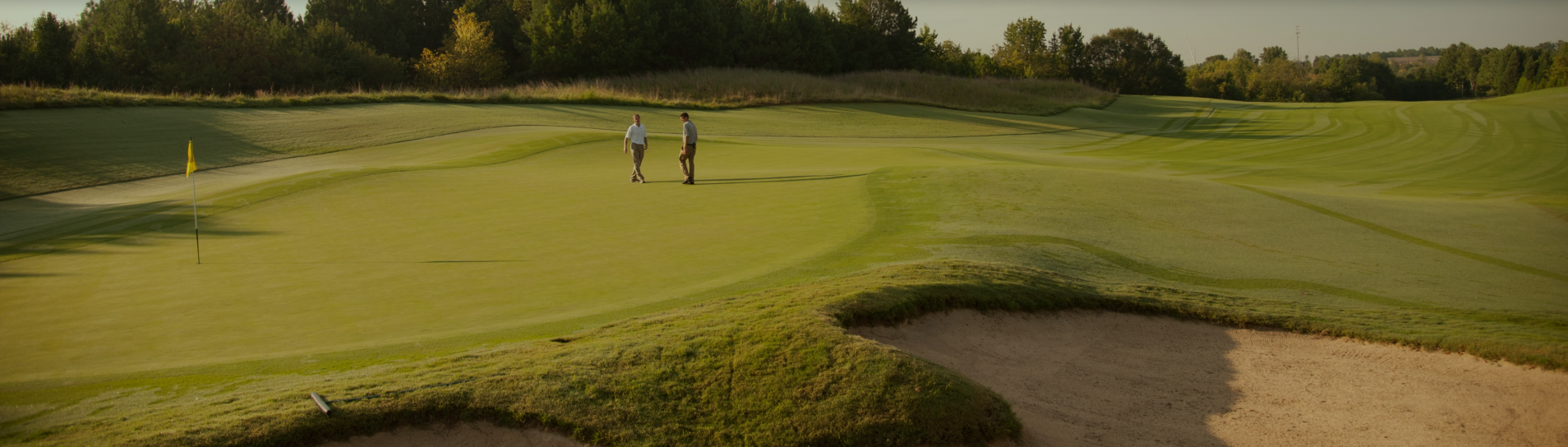
The art of cup cutting The old USGA “rule of thumb” of six easy, six medium and six hard cups is for tournaments. Nine easy and nine medium is a much more sensible everyday guideline. Also, go easy on the cups cut in the very front of the green. Few amateur players are capable of spinning the ball back to the hole, which means they are forced to land their shot off the green and guess how far it will roll — a tricky business. I believe that two “front cups” a day are plenty. Cups go in flat areas of the green and must be perpendicular to the surface. Nothing less is acceptable. Even when the PGA Tour sets a tough cup, it’s in a level spot that is tucked behind a bunker or close to the most hazardous side of the green. If a green only has three flat spots, so be it. Accept the fact and rotate your cups through those three spots. Cups on that green may have to be changed more often. Don’t try to create a cup position that doesn’t exist. Those greens with limited cup positions cry out for a fall rebuilding project. Tough rough Rough kept at 1¾ inches and below is sufficiently challenging. Augusta’s famous “second cut” isn’t even that long. Contrast with the fairway is still evident at this height. During periods of flush growth this requires more than the regularly scheduled mowing, but it’s definitely worth it. If there’s a special occasion when the committee believes longer rough is required, such as a regional tournament, fine. But as soon as the event is over, mow it back to 1¾ inches. If this results in excessive clippings, drag some hoses or use mulching blades. Misaligned tee markers In our current era of multishaped tees (round, oval, kidney, amoeba as well as rectangular), it is a bit of a challenge setting those tee markers correctly. The correct setting should be perpendicular to the center line of the fairway. They may need to hold their arms out to the side while looking right at the center of the fairway. If it takes a little longer to get it right, it’s certainly worth it. One superintendent I know has asked one of his golfers who plays early every morning to be his “askew crew,” and to quietly correct any tee markers he finds misaligned. Firm, not soft The fact is, the best greens play slightly on the firm side. Often “overwatering” is a result of attempting to remedy hot spots or isolated dry spots by watering the entire green area. A more effective solution is to aerify the hot spots with small tines and hand water those spots only, ensuring that the water goes where it’s needed instead of water-logging the whole green, leaving it susceptible to disease and damage. Something to be proud of Leo Feser Award candidate |
RECENT issues
|
|||||||||