home | subscribe | contact us | advertise with us | feature editorial guidelines | research editorial guidelines | gcsaa.org
September 2008


In this issue

On the Web

Feature articles

The Insider

Departments

Research

GCM blog

GCM NewsWeekly


Break out the brush

The rising cost of fuel, seed and labor motivates courses to consider alternatives to the practice of overseeding.

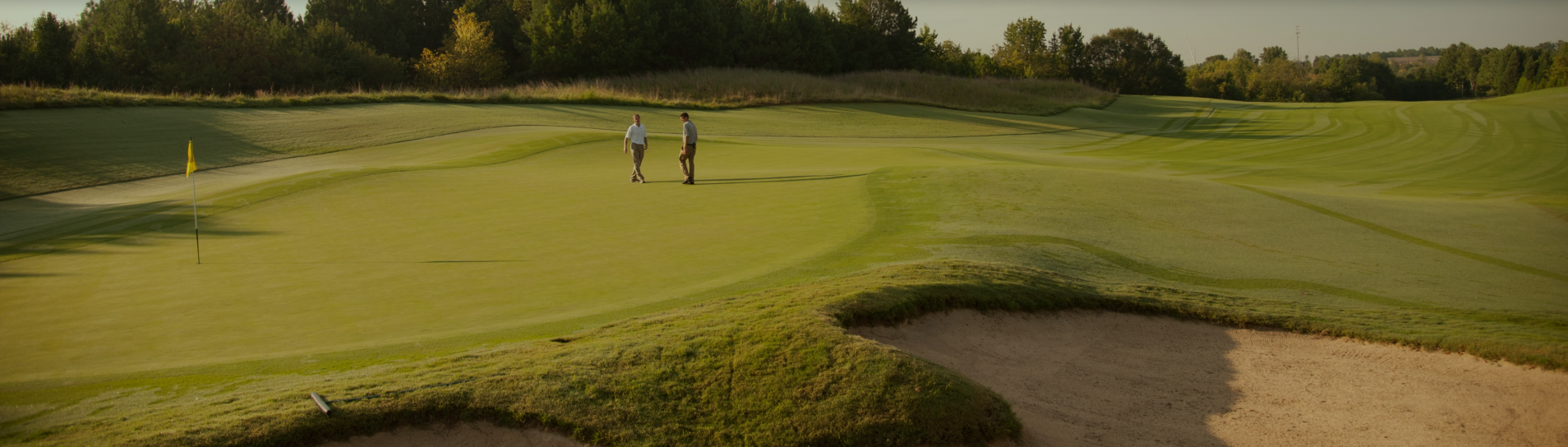
The practice of turf painting has developed into a legitimate alternative to overseeding. Photos courtesy of Memphis CC

As the pressure to reduce operating expenses reaches superintendents across the country, professionals are getting creative with their traditional greens maintenance solutions.

One practice getting extra scrutiny in many parts of the country is overseeding. Superintendents are examining the plusses and minuses of reducing the amount of overseeded turf on their properties or even eliminating the practice altogether. And in some instances, they’re managing the aesthetics of their course with turf paint.

Steve Derrick, the turf division manager for Southern States Cooperative based in Cartersville, Ga., says the practice of painting as an overseeding alternative really began gaining momentum five years ago as more and more courses began turning to hybrid bermudagrasses. Those new turfgrasses gave courses an exceptional putting surface, he says, but they also brought with them an increased need for color when the grass went dormant in the fall.

Chris Hartwiger, a senior agronomist with the USGA Green Section, adds the solution may be picking up steam.

“Courses are having great success,” Hartwiger says. “Most importantly, golfers prefer a painted surface.”

Years of experience

At Memphis (Tenn.) Country Club, CGCS Rodney Lingle has been using turf paint as an alternative to overseeding for nearly 20 years. According to the 34-year GCSAA member, no other courses were using this method at the time he began. Today, as many as 10 courses in the Memphis area currently paint their courses — a few of which abandoned overseeding within the last year or two.

“As more courses in this area move from bentgrass to bermudagrass, the appeal for avoiding spring transition has increased,” says Lingle, who paints his greens with Green Lawnger turf paint.

Danny Malone, CGCS, who is the director of golf courses and grounds for Berkeley Hall Golf Club in Bluffton, S.C., began painting as an alternative to overseeding in 1993 because of the cost savings it provided the small course he managed at the time. Since that time, he has seen a dramatic increase in the number of courses actively choosing the turf paint substitute.

“I think the increase is due in large part to education,” says Malone, an 11-year member of GCSAA. “Courses are seeing the results others are having, particularly down here where transition during our busiest playing time is really inconvenient.”

Malone believes his golf club is among 12 in the area using turf paint as an alternative to fall overseeding.

Malone also cites the USGA’s recent attention to the practice — including studies and courses devoted to the topic — as part of the reason for the increase in painting.

Surface consistency

The USGA’s Hartwiger has several reasons for supporting the use of turf painting as an alternative to overseeding, most notably the aesthetic, turf health and economic benefits he sees.

The first reason Hartwiger cites relates to the golfing surface. “Ultradwarf grasses have excellent winter wear tolerance, and they provide good winter surfaces,” he says. “Painting gives them a green color, which is important to many golfers.”

Some argue golfers may snub painted greens because they believe the paint creates a less-than-stellar playing surface. However, a 2005 Clemson University study found no differences in ball-roll distance between painted and nonpainted greens. (For a more complete discussion of the Clemson study, see “Painting dormant bermudagrass putting greens," Pages 86-91, in the November 2007 issue of GCM.)

A stronger base

Second, Hartwiger says superintendents will actually protect the ultradwarf bermudagrass by avoiding overseeding. Steering clear of the fall disruption caused by overseeding helps create a stronger ultradwarf turf. In addition, there is no competition from ryegrass during spring transition, creating a healthier environment for spring green-up. 

“Less overseeding also means less organic matter being deposited in the upper root zone,” Hartwiger says. “This produces firmer greens that are less prone to secondary problems such as scalping, algae, disease and softness.” 

“We’ve noticed a significant change in terms of the health of the grass,” adds Berkeley Hall’s Malone, who paints his courses’ greens, tees and fairways.

Additionally, turf paint, when used in conjunction with other materials, can elevate the heat-absorbing capacity of a course’s soil, helping to extend turfgrass growth and color into the cooler months and prolonging golf playing conditions on a course.

Lowering costs

Painting uses less water, less fertilizer and fewer pesticides. It also requires less manpower and equipment energy and can cost as little as $300 to $500 per acre. Overseeding — when factoring in the cost of seed, fertilizer, extra watering, labor, fungicides, increased mowing and transition chemicals — can cost as much as $60,000 (based on 30-35 acres of fairway).

“There are a lot of hidden costs to overseeding,” notes Southern States Cooperative’s Derrick. “Equipment costs are important to consider. Not only are you burning more fuel when you’re out mowing the overseeded turf, you’re also putting more wear and tear on machines that require regular maintenance.”

Water is another expense reduced by painting. While painted greens still need water to avoid desiccation, overseeding requires much more water to encourage germination and seedling growth. Depending on the condition of a course’s soil and the area’s climate, approximately four weeks of watering is needed to boost seed growth.

Avoiding the chemicals necessary for overseeding and the resulting transition period also can add to a course’s overall “green” reputation.

Applying the paint

One application of turf paint typically lasts 10 to 14 weeks. Courses that wait until the ultradwarf bermudagrass goes dormant to begin the painting process need one to two applications to get through to spring. Other courses — those that want consistent green — make their first application before dormancy begins. When this kind of timeline is followed, weather is much more likely to fluctuate. If temperatures rise and mowing is required, additional applications will be needed to replace the color removed by the mower blade.

“When courses are painted correctly, golfers can rarely tell the difference,” said Memphis CC’s Lingle, who hand paints his grounds with a spray gun applicator, giving the course a more natural look. “In fact, I’ve received calls from players inquiring about what kind of grass we use. They’re always surprised to learn it’s painted dormant bermuda."


Joe Lara is product manager for Becker Underwood, producer of specialty turf products for the golf course industry.

GCM archive