home | subscribe | contact us | advertise with us | feature editorial guidelines | research editorial guidelines | gcsaa.org
October 2007


In this issue

On the Web

Feature articles

The Insider

Departments

Research

GCM blog

GCM's Ask the Experts

Encore performance

GCSAA National Championship and Golf Classic
returns to Orlando, a five-time host of the event.

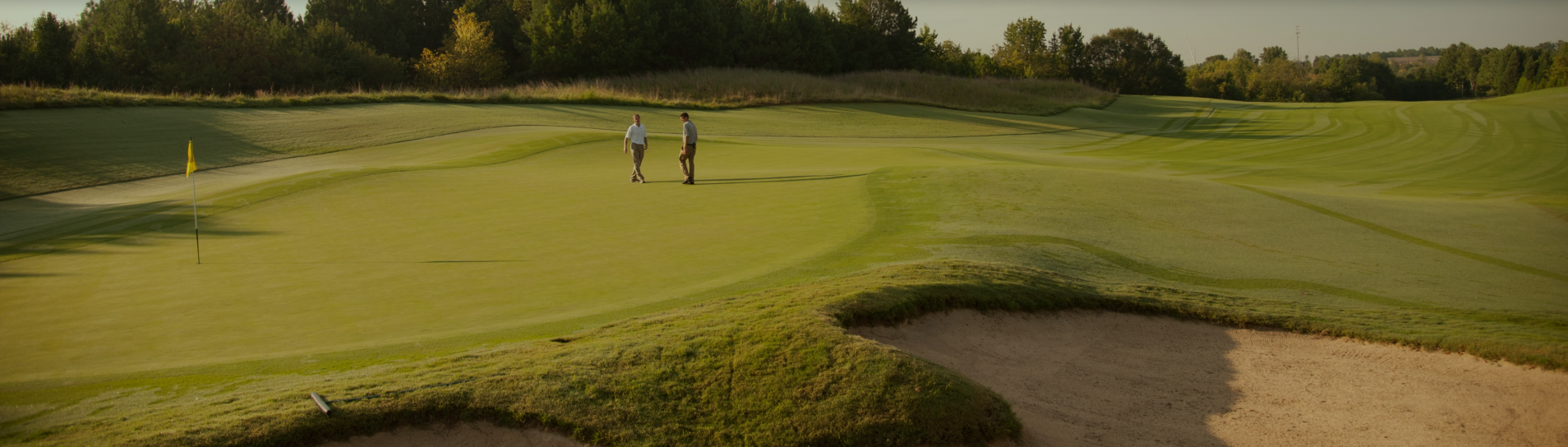
The 14th hole on the Tom Watson-designed Independence Course
at Ginn Reunion Resort. Photo by John R. Johnson / golfphotos.com

Orlando has long been one of the world’s most popular vacation and convention destinations. At the end of January, the central Florida city will add another notch to its promotional belt when it becomes the unofficial home of the GCSAA National Championship and Golf Classic.

When the 58th edition of the association’s annual golf event hits Orlando Jan. 25-30, it will mark the fifth time the city has played host to the event, more than any other city in tournament history. That’s not really surprising considering that Orlando has hosted the GCSAA Education Conference and Golf Industry Show every three years since 1996, making the golf-rich area a no-brainer to also host the tournament. Still, it is notable.

So too are the five golf courses spread out over three facilities that will play host to tournament action. The site of the GCSAA National Championship, the Independence Course at Ginn Reunion Resort, is notable for the boatload of awards the course has racked up since opening in late 2004 and for hosting the LPGA Tour’s newest tournament, the Ginn Open, this past April.

Among the Golf Classic layouts, the Crooked Cat and Panther Lake courses at Orange County National are noteworthy for their familiarity to tournament participants, since they were in the GCSAA rotation the last time the tournament visited Orlando in 2004. And the North/South and New courses at Grand Cypress Resort are preeminent for their lofty perch among the many resort courses that dot this part of Florida.

The sixth hole on the North Course at Grand Cypress GC. Photos courtesy of Grand Cypress

Following two days of practice rounds and tournament registrations — capped by a Saturday night Welcoming Reception — play in the 54-hole National Championship begins on Sunday, Jan. 27. The popular Four-Ball competition is also on Sunday, while the Golf Classic plays out Monday and Tuesday, Jan. 28 and 29. Post-round receptions, tabbed as the 19th Hole, will be held following all three days of competition at the official host hotel for the event, the Carribe Royale Orlando (www.carriberoyale.com).

Registration for this year’s GCSAA National Championship and Golf Classic teed off in mid-September and ends at 5 p.m. CST on Monday, Nov. 19. For more information, visit www.gcsaa.org/gis/2008/tour.asp.

The Independence Course
Ginn Reunion Resort

www.reunionresort.com/reunion/independence.aspx
Like Orange County National, Ginn Reunion Resort is no stranger to participants in the GCSAA tournament. In 2004, the facility’s Arnold Palmer-designed Legacy Course was among the host courses. At that time, the Tom Watson-designed Independence Course — the site of the 2008 National Championship — wasn’t open, although it was well into grow-in in advance of a November 2004 unveiling.

When it did open, it wasted little time in racking up some impressive honors. Golf Digest ranked it 10th on its list of best new resort courses in 2005; it was 12th on a similar list compiled by Golfweek that year. And as previously mentioned, the LPGA’s Ginn Open utilized portions of the Independence Course (competitors played a composite course fashioned out of the Independence and Legacy courses) for the inaugural tournament this past April.

One of the first things players will notice about the Independence Course, aside from the intricate bunkering that is illustrated in the photo of the course that accompanies this story, is the very un-Florida-like terrain the layout is cut from. In some places, there is as much as a 45-foot change in elevation from tee to green. That’s not much if you’re in the Rocky Mountains, but it’s dramatic in central Florida.

The Independence Course will be overseeded come February, but features TifEagle bermudagrass on its greens with Tifdwarf bermudagrass on the surrounds and approaches. From the championship tees, the layout plays to 7,154 yards with a course rating of 74.7 and a slope of 140.

Kris Chambrot, a five-year GCSAA member, is the superintendent at the Ginn Reunion Resort and oversees maintenance on all 54 holes. Assistant Superintendent Alan Fitzpatrick, a six-year member of GCSAA, is Chambrot’s right-hand man on the Independence Course.

The two courses at Orange County National (the ninth hole on the Crooked Cat course is pictured here) hosted GCSAA tournament play in 2004. Photo courtesy of Orange County National

The Crooked Cat and Panther Lake Courses
Orange County National

www.ocngolf.com
While playing host to the GCSAA Golf Classic for the second time is a huge feather in Orange County National’s collective cap, it’s really more business-than-usual than you might think for Carl Benedict, the facility’s director of golf course maintenance and a Class A member of GCSAA, and his team. Big events have been the rule and not the exception since OCN opened in the late 1990s.

The PGA Tour’s qualifying event — Q School — has been played every other year since 2003 at Orange County National, including the 2007 event this December. The facility’s innovative circular practice range, a massive 42 acres in size, regularly hosts demo days during the PGA Merchandise Show. And remember the Tiger Woods “bouncing ball” commercials for Nike? Those were filmed at OCN.

The two courses at Orange County National have changed very little since 2004, according to Benedict. In early 2005, both courses took on some additional trees, bunkers and a pair of waste bunkers, while the 18th fairway on the Panther Lake Course was redesigned into a split fairway. Other than that, the layouts largely will play as they did three years ago.

The Panther Lake Course can be stretched to 7,350 yards from the back tees, with a course rating of 75.6 and a slope of 134. The Crooked Cat course measures 7,493 yards from the back, with a course rating of 76.2 and a slope of 139.

Benedict, a 14-year member of the association, has been at Orange County National for nine years.

The opening hole on Grand Cypress’ South Course.

The North/South and New Courses
Grand Cypress Golf Club

www.grandcypress.com/golf/
Next to the area’s thriving theme park industry, what draws so many visitors to central Florida each year is an abundance of high-quality resort golf courses. And among those many, few facilities can match the reputation of the 45 holes of golf at Grand Cypress.

The courses, all Jack Nicklaus signature designs, are configured to offer visitors a wide variety of playing options. GCSAA will play the New Course, a traditional 18-hole layout, and the North/South Course, pairing two of the three remaining nine hole tracts at Grand Cypress.

Although the name is a little misleading considering it opened in 1988, the New Course is the most recent addition to the golf family at Grand Cypress. This wall-to-wall bermudagrass course (greens and tees will be overseeded in January) pays homage to one of Nicklaus’ favorite layouts, the Old Course at St. Andrews, and features double greens, stone bridges and walls, mounds covered with gorse and deep pot bunkers. The New Course plays to 6,693 yards, with a course rating of 71.5 and a slope of 122.

The North/South combo is considered the “original” layout at Grand Cypress and is a more traditional Florida layout. The South nine underwent a full renovation this past summer, including a switch to MiniVerde bermudagrass, and both the North and South will be overseeded wall to wall at tournament time. The courses combine to stretch to 7,028 yards from the tips, with a course rating of 74.4 and a slope of 136.

Veteran Florida superintendent Tom Alex, a 23-year GCSAA member, heads golf course maintenance at Grand Cypress. Todd Walsworth, an 18-year GCSAA member, is superintendent at the New Course, while Reese Patterson is superintendent at the North, South and East courses.


Scott Hollister is the editor of GCM.

RECENT issues

September
2007

August
2007