Celebrating a century of leadership in golf course management with 100 facts from GCSAA past to present.
Key takeaways
- Innovation, education and research have been foundational to GCSAA’s work over the past century.
- GCSAA’s 100-year history is ultimately a story of members coming together to strengthen and advance their profession.
- GCSAA has continually evolved alongside the golf course management profession.
Today, Sept. 13, 2026, GCSAA marks 100 years of advancing the golf course management profession. These 100 milestones trace a sampling of the association's journey from its founding in 1926 through a century of education, innovation, service and professional growth.
1. 1926:
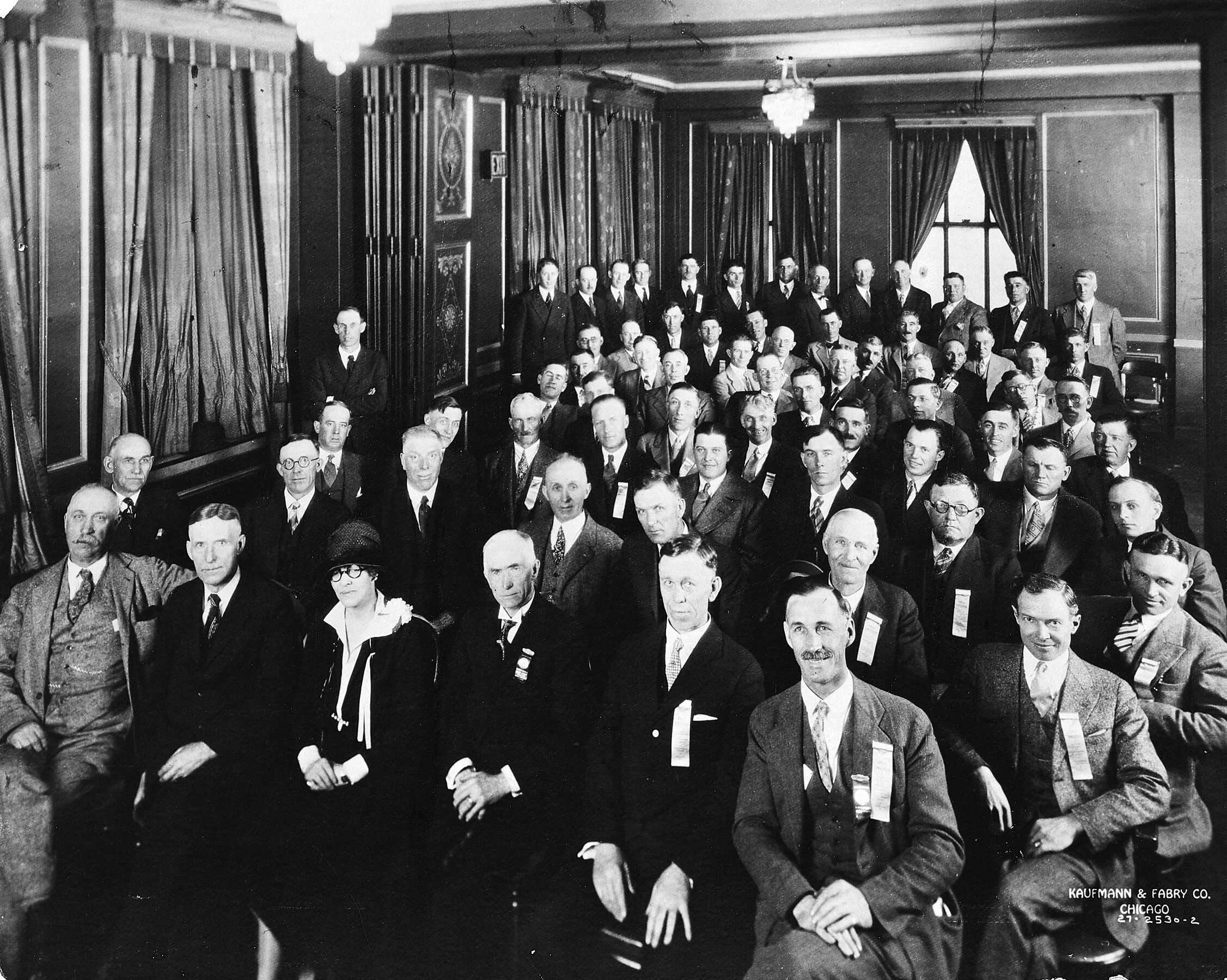
The National Association of Greenkeepers of America (NAGA) was formed at Sylvania Country Club in Toledo, Ohio, by founder John Morley and 60 fellow greenkeepers.
2. 1927:
The first issue of The National Greenkeeper magazine was published, featuring association president John Morley on the cover.
3. 1927:
The first national conference and equipment show was held at the Hotel Sherman in Chicago, drawing 350 attendees and 27 exhibitors - the beginning of what became the GCSAA Conference and Trade Show.
4. 1928:
The association officially became a nonprofit organization after receiving its articles of incorporation from the State of Delaware.
5. 1929:
The stock market crashed, marking the beginning of the Great Depression. NAGA established an employment bureau for the benefit of its members.
6. 1929:
Membership surpassed 500 members by the end of January.
7. 1930:
Founder John Morley received the honorary title of “Colonel” from the governor of Kentucky.
8. 1930:
A yearly subscription to The National Greenkeeper cost just $2 for members.
9. 1931:
The USGA formally recognized the association and appointed five greenkeepers, including John Morley, to its Green Section advisory committee.
10. 1932:
John Morley became the first recipient of the association's Distinguished Service Award.
11. 1932:
After leading the organization since its founding, John Morley retired as president.
12. 1933:
During the Great Depression, the association lost access to $16,000 when the Guardian Trust Company of Cleveland closed its doors.
13. 1933:
To survive financially during the Depression, regional associations and members loaned money to support association operations.
14. 1933:
The association began publishing its own magazine, eventually renamed The Greenkeeper Reporter.
15. 1934:
Bylaw changes established a stronger relationship between local chapters and the national association.
16. 1934:
The association established its first national headquarters in St. Charles, Illinois.
17. 1935:
Discussions began about changing the association's name to better reflect the growing professionalism of the industry.
18. 1935:
Edward Stimpson invented the stimpmeter after attending the 1935 U.S. Open at Oakmont Country Club.
19. 1936:
Dr. Glen Burton began breeding bermudagrass in Tifton, Georgia.
20. 1937:
An attempted name change to the American Greenkeeping Society was later voided because of an incorrect voting procedure.
21. 1938:
Following the correct voting procedures, the organization officially became The Greenkeeping Superintendents Association.
22. 1938:
The first annual association golf tournament was held in Hartville, Ohio.
23. 1939:
Membership exceeded 600 members.
24. 1939:
The association launched its first regional education program in Kansas City.
25. 1940:
The association rented office space in Chicago for its first “real” office.
26. 1940:
An examination requirement for membership was approved but later suspended because of World War II.
27. 1941:
Although the United States entered into World War II, the association proceeded with its already-planned 1942 conference and show.
28. 1941-45:
Golf course superintendents helped the war effort by growing victory gardens and turfgrass for military landing strips and airports.
29. 1942:
The association voted to suspend future conferences and annual meetings for the duration of World War II.
30. 1942:
An associate membership category was introduced, offering all member benefits except voting rights.
31. 1943:
Superintendents volunteered their time to build putting greens at hospitals for recovering servicemen.
32. 1944:
Instead of holding an annual meeting during the war, the association conducted a membership survey.
33. 1946:
Tom Mascaro invented the aerifier. His innovation revolutionized turf care, relieving soil compaction and improving the movement of air, water and nutrients to the roots.
34. 1946:
Many exhibitors still had limited equipment available because factories were transitioning back to domestic production after the war.
35. 1946:
The association’s annual golf tournament returned following the conclusion of World War II.
36. 1946:
Founder and first president John Morley passed away.
37. 1947:
More than 1,200 people attended the conference in New York City.
38. 1947:
The USGA officially recognized the association tournament and began awarding medals to winners.
39. 1948:
The organization added “National” to its name, becoming the National Greenkeeping Superintendents Association.
40. 1949:
The annual conference was held on the West Coast for the first time when more than 800 people gathered in Los Angeles.
41. Early 1950s:
Brentwood Country Club installed one of the earliest fully automatic irrigation systems.
42. 1951:
The association officially adopted its current name: Golf Course Superintendents Association of America.
43. 1951:
The association magazine changed its name to The Golf Course Reporter.
44. 1951:
Quarter Century pins were introduced to recognize 25-year members.
45. 1952:
Members voted to adopt a group life insurance plan.
46. 1953:
A new GCSAA logo was introduced.
47. 1953:
The national association organized regional educational clinics around the country.
48. 1954:
GCSAA launched a Field Testing Program to evaluate new grasses, materials and turf management methods on golf courses.
49. 1955:
The GCSAA Scholarship and Research Fund was established.
50. 1955:
The first superintendent salary survey was published in the association magazine.
51. 1956:
The Leo Feser Award honoring excellence in golf course management writing was presented.
52. 1957:
Membership exceeded 1,000 members.
53. 1957:
The first pamphlet explaining the duties of a golf course superintendent was published.
54. 1958:
The Scholarship and Research Fund received its first outside contributions, including support from Toro.
55. 1959:
Dr. Gene C. Nutter became the association’s first executive director.
56. 1959:
National headquarters moved to Jacksonville Beach, Florida.
57. 1959:
Membership reached 1,500 and association income climbed to $379,000.
58. 1960:
The National Golf Foundation donated $7,500 to the Scholarship and Research Fund.
59. 1960:
The annual conference and show added the word “International” to reflect its growing reach.
60. 1961:
Attendance exceeded 1,750 with 130 booths at the International Show in Toronto.
61. 1961:
A new members-only publication called The Newsletter was introduced.
62. 1962:
Gardner Stoddard became GCSAA’s 4,000th member.
63. 1963:
An association pension plan was introduced.
64. 1964:
The annual conference earned the nickname “The Greatest Show on Turf.”
65. 1964:
Rachel Carson’s Silent Spring brought environmental awareness into national conversations during a transformative period for turf management.
66. 1965:
GCSAA headquarters moved back to the Chicago area.
67. 1965:
In its first decade, the Scholarship and Research Fund distributed more than $51,000 to 110 scholarship recipients.
68. 1966:
Affiliated chapters and associations were added to the membership categories.
69. 1966:
The association magazine changed its name to The Golf Course Superintendent.
70. 1967:
GCSAA launched its first public relations program and received radio and television coverage nationwide.
71. 1968:
A “Hippie Happening” was part of the social activities at the San Francisco conference and show.
72. 1969:
Dr. Paul Alexander became the first GCSAA director of education.
73. 1969:
Conference attendance reached 3,411 as staff grew to 11 employees.
74. 1970:
GCSAA revised its Code of Ethics.
75. 1971:
Lawrence, Kansas, was selected as the site for the association’s first permanent headquarters.
76. 1972:
The GCSAA certification program launched in September.
77. 1973:
Construction began on the first headquarters building in Lawrence, Kansas.
78. 1974:
The new headquarters building was officially inaugurated.
79. 1975:
Annual membership dues were $65 for individuals and $130 for companies.
80. 1976:
GCSAA celebrated its 50th anniversary at Sylvania Country Club in Toledo, Ohio, with Arnold Palmer serving as keynote speaker.
81. 1976:
The GCSAA Industrial Advisory Council met for the first time to strengthen communication between the association and industry partners.
82. 1977:
The Leo Feser Award returned after a 21-year hiatus.
83. 1979:
The association's magazine became Golf Course Management.
84. 1981:
The Board of Directors wore plaid jackets inspired by Old Tom Morris and the Gordon clan.
85. 1983:
Arnold Palmer became the first recipient of the Old Tom Morris Award.
86. 1983:
A major joint GCSAA-USGA research project focused on developing turfgrasses that used 50% less water.
87. 1984:
More than 54 hours of educational programming were offered at the annual conference.
88. 1985:
Membership reached 6,389.
89. 1986:
The first GCSAA television commercial aired on ESPN during the PGA Championship.
90. 1987:
GCSAA established a Government Relations department to monitor regulations affecting golf course management.
91. 1989:
The Center for Golf Course Management was established to provide industry research and trend information.
92. 1990:
Membership surpassed 10,000 members.
93. 1991:
Chester Mendenhall, the last surviving charter member, dedicated the new headquarters building.
94. 1991:
The Environmental Stewardship Award was introduced.
95. 1992:
GCSAA launched an international program and opened an office in Singapore.
96. 1995:
GCSAA launched its first website homepage.
97. 1996:
GCSAA.org debuted and received nearly 100,000 hits in its first month online.
98. 2021:
GCSAA elevated the Col. John Morley Award to Pinnacle status and launched the Emerging Leader Award.
99. 2023:
GCSAA launched the Women's Leadership Academy to help break barriers and build networks for women in the turfgrass industry.
100. 2026:
GCSAA celebrates its 100th birthday Sept. 13, 2026.
Next step