

This region includes Arizona, California, Hawaii and Nevada
Prior to joining the GCSAA staff, Jeff spent more than a decade in the golf industry in management and marketing. He resides in Henderson, Nev.
Tel. 800-472-7878, ext. 3603; jjensen@gcsaa.org
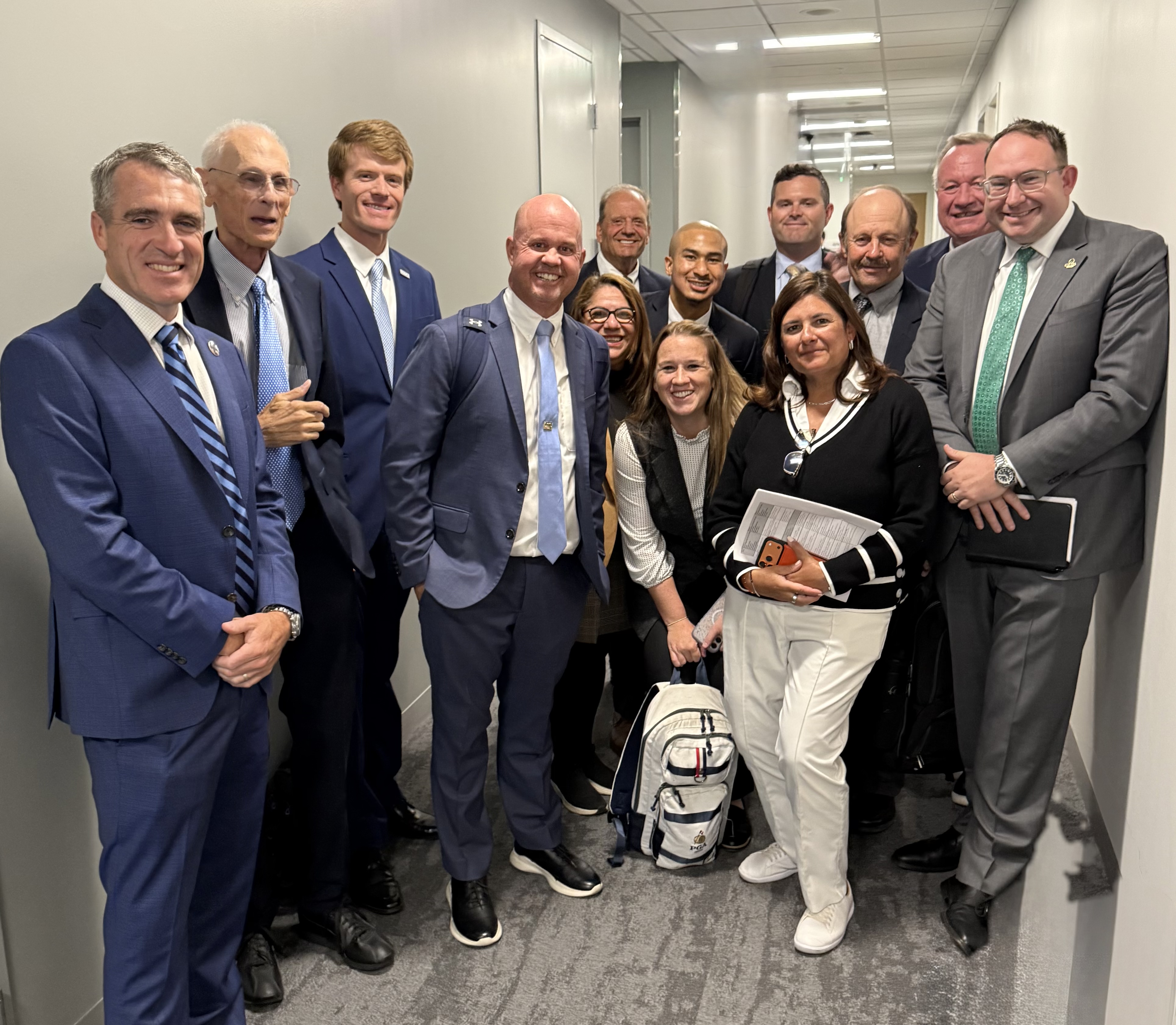
Over thirty visits were conducted with members and staff of the California Legislature
The California Alliance for Golf (CAG) visited the state capitol in Sacramento on April 15 to discuss a variety of critical bills affecting the golf industry during this year’s legislative session. CAG advocates, supports, and advances the game of golf in California, representing 380,000 golfers and the PGA golf professionals, golf course superintendents, and general managers who labor to bring the game to all of California’s 3.3 million golfers.
Over 30 visits were conducted with members and staff of the California Legislature, focusing on the bills below, including AB 1954, which was sponsored by CAG and marked an industry first in the State of California.
Sponsor:
AB 1954 (Protecting Access to Reservations; PAR ACT) (Ward; D-San Diego)
There are over 220 golf courses in California that are municipally owned by cities, counties, charter cities, and the state. As part of publicly owned park systems, these courses operate per business models that eschew maximal revenue generation in favor of making them universally and equitably available to local residents, seniors, juniors, school athletes, local clubs, and civic organizations. Because California’s urban areas are among the most golf-starved in the nation, this model creates a demand for tee times second to none.
It has also created opportunities for 3rd party tee time brokers to capture and broker tee times at inflated prices and in the process substantially reduce the already strained supply of recreational opportunities available to California residents, siphon resources that might otherwise accrue to the benefit of golf enterprise funds and/or general funds of municipal park departments, and turn them more into de facto playgrounds for the privileged than recreational sites equitably available to local residents, seniors, juniors, school athletes, local clubs, local charities, and civic organizations.
AB 1954 would give the state’s cities, counties, charter cities, and the state itself a tool in the form of a civil remedy to restrain third-party brokering that is not performed by consent of the parties. This is a tool that they do not now have and one that only the state can provide.
Oppose:
SB 1197 (Permanent standard time) (Niello; R-Roseville)
This bill would repeal the permanent daylight saving time preference expressed by 60% of the California electorate in 2018 and replace it with a permanent standard time preference.
The bill issues a conclusion about the benefits of permanent standard time over permanent daylight saving time by considering one and only one aspect of its consequences (sleep studies) while completely ignoring the need to consider other impacts and aspects – e.g., economic consequences, energy, the loss of active recreation hours for a generation of young persons whose sedentary lifestyles have led health experts to predict that it will be the 1st generation in American history to lead shorter lives than their parents, tourism, highway safety, and crime (a 2015 Brookings Institution study concludes that crime would be 7% less under permanent daylight saving time). Any fully informed decision regarding which means to adopt to eliminate the spring change demands an analysis of more than just one factor.
Tracking:
AB 1603 (PFAS) (Schultz; D-Burbank)
The bill would require the director, on or before January 1, 2028, to prescribe the time when, and the conditions under which, a PFAS-restricted material may be used or possessed in different areas of the state and would authorize the director to prohibit the use or possession of a PFAS-restricted material in those areas. This bill would, commencing January 1, 2030, prohibit a person from using a pesticide that contains, and a person or entity from manufacturing, selling, delivering, holding, or offering for sale in commerce any pesticide that contains, any of the specified PFAS that are intentionally added as active or inert ingredients. The bill would, commencing January 1, 2035, prohibit those actions involving pesticides that contain PFAS intentionally added as active or inert ingredients. Violations of these provisions would be a crime.
AB 2636 (Small off-road engines: rebates) (Rodrguez; D-San Fernando)
This bill would require each air pollution control and air quality management district, no later than January 1, 2028, to implement and maintain a commercial rebate program to support the transition to zero-emission small off-road equipment consistent with specified requirements. This bill would prohibit, until January 1, 2032, a local government from adopting or enforcing an ordinance that prohibits the use of small off-road engine landscaping equipment, except as specified, and would prohibit the punishment of a violation of an ordinance adopted by a local government governing the use of any small off-road engine landscaping equipment as an infraction or misdemeanor, as specified.
The bill raises concerns golf has had with CARB’s failure to take seriously AB 1346’s directive to ban the sale of subject gas-powered equipment only upon making a finding that an electric equivalent is commercially available and fit for intended use, a concern exacerbated by the City of San Francisco and others proposing ordinances that banned the use of subject gas-powered equipment in addition to banning its sale.
The 2026 California Legislative Session runs through September, and more information on these bills will be available as they fail or advance. For more information on CAG, visit CAG's website.
Upcoming events in the region.